
Pickleball tips for beginners start with simple habits, not power. Serve in, return deep, get to the kitchen line, and keep the ball in play.
This guide follows the tone of USA Pickleball: plain words, fundamentals first, and no hype. Rules were checked against the 2026 USA Pickleball Official Rulebook and the Essential Pickleball Rules Summary. Tips are coaching advice, not rules, unless the guide says a point is a rule. In Canada, sanctioned play follows the same 2026 rulebook.
What Is Pickleball?
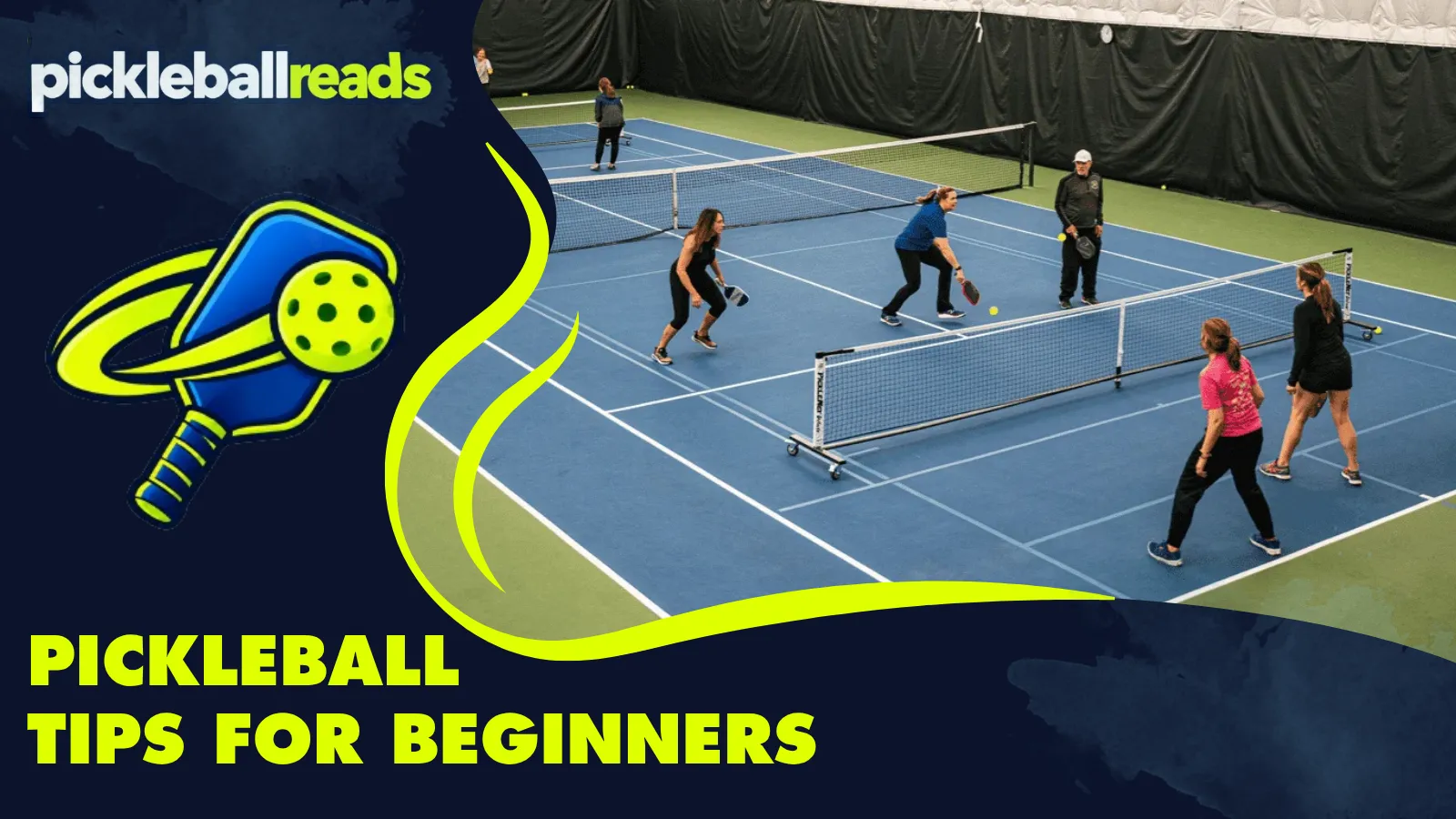
Pickleball is a paddle sport that combines elements of badminton, table tennis, and tennis. It is played with a special perforated ball on a 20-foot by 44-foot court with a tennis-type net. The court is divided into right and left service courts, with a non-volley zone on each side of the net.
You can play singles, one player per side, or doubles, two players per side. Doubles is the most common format, and beginners often start with doubles because it requires less court coverage.
Why Pickleball Is Easy to Start
Pickleball is welcoming because the court is small and the basic rules are short. You do not need to hit hard to enjoy a game. A soft, well placed shot often wins more points for a beginner than a fast shot that goes out.
It is also a social game. Many players learn through open play, where players rotate in and out, and through beginner sessions at local parks and clubs.
Equipment You Will Need
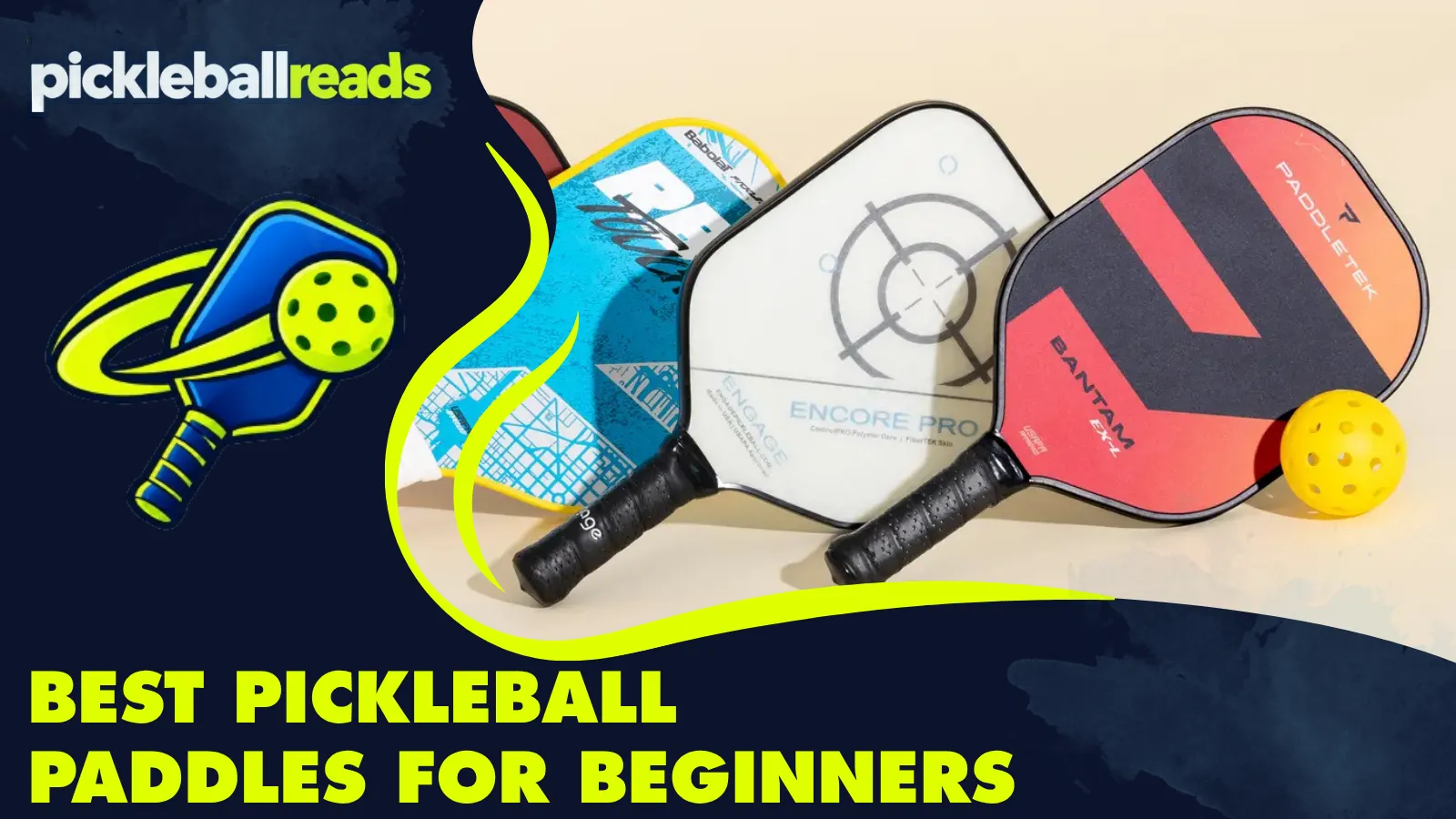
You need a paddle, a perforated plastic ball, court shoes, and comfortable clothes that let you move freely. For sanctioned play, players must use a paddle on the USA Pickleball Approved Paddle List, and size limits apply: combined length and width must not exceed 24 inches, and length must not exceed 17 inches.
For casual beginner play, focus on a paddle that feels comfortable and does not strain your wrist. Court shoes matter more than a specific paddle material. Choose shoes made for court sports, with support and traction for quick stops and sideways movement.
How to Get Started
Start with a local park, community centre, or club that offers open play or beginner sessions. Arrive early, tell the group you are new, and ask how rotation works. A short lesson can help with grip, serve form, and court movement, but it is not required before your first game.
Basic Rules Every Beginner Needs
These are rules, not tips. Learn them before your first game.
Serve: Serve underhand and diagonally into the opposite service court. For a volley serve, the paddle must move in a clear upward arc, the paddle head must not be above the wrist, and the ball must be no higher than the waist at contact. A drop serve is also allowed: drop the ball, let it bounce, then hit it. Only one attempt is allowed per server, and at contact at least one foot must be behind the baseline.
Two-bounce rule: The receiving team must let the serve bounce, and the serving team must let the return bounce. After those two bounces, both teams may volley or play off a bounce.
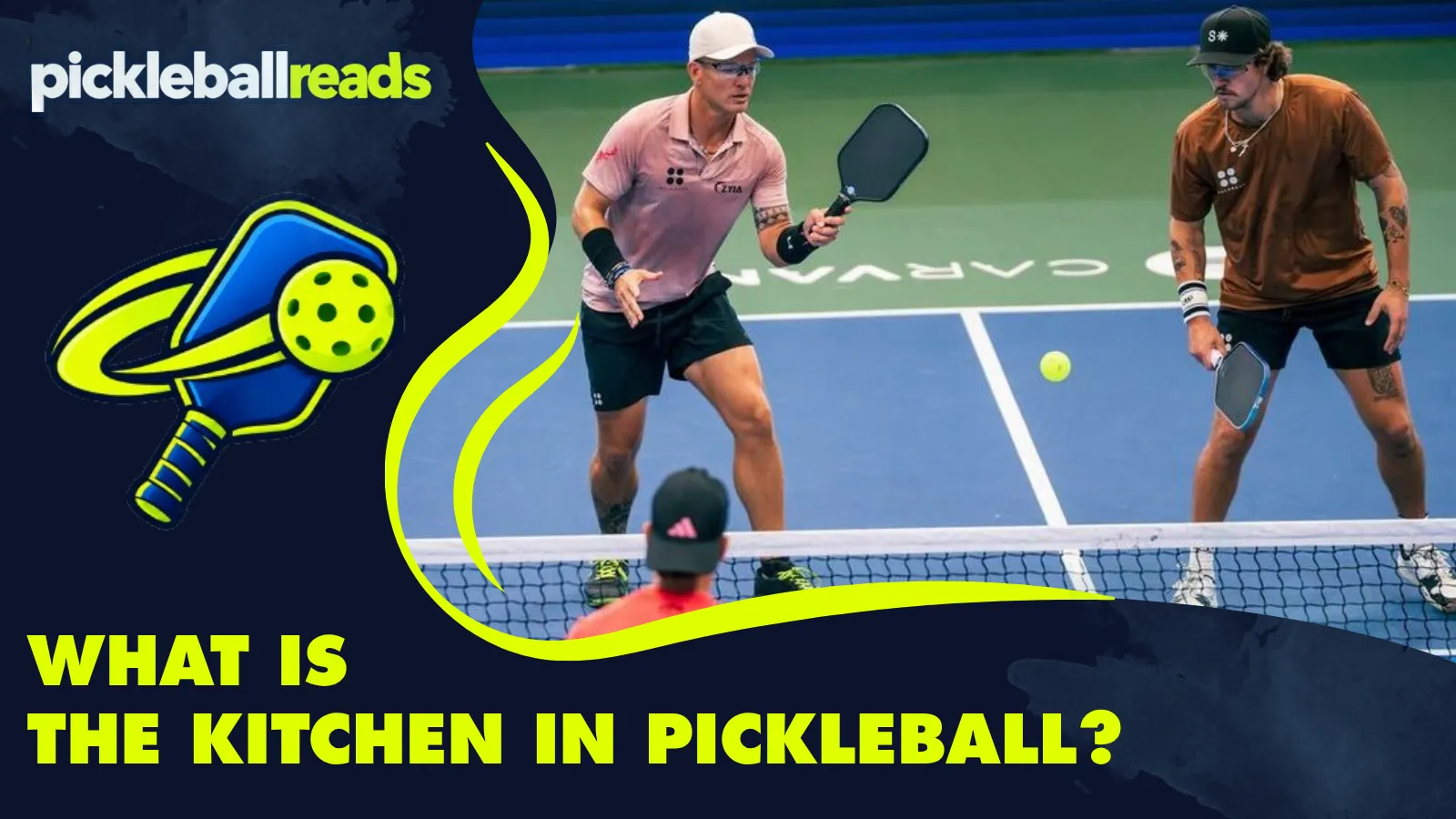
Kitchen, or non-volley zone: The zone is 7 feet by 20 feet on each side of the net. You may stand in it at any time other than when volleying. Volleying while touching the zone, including the line, is a fault, as is momentum into the zone after a volley.
Serve placement: The serve must clear the kitchen and land in the correct diagonal court. A serve on the kitchen line is short and a fault. A ball on any other line is in.
Faults: A fault ends the rally. Common faults are a serve outside the correct court, a ball into the net, a ball out of bounds, a volley before both bounces, a volley from the kitchen, and a ball bouncing twice on one side.
For the full rule list, see pickleball rules.
Beginner Pickleball Tips: Foundations for New Players
These tips shape every rally. Practice them in order, and add the next section only when these habits feel natural.
Listen and learn. If a player tells you about a rule, check it after the rally. Asking about a score or position before the next serve is allowed.
Keep serves simple. Aim for a consistent serve that lands in the correct court. Power can wait.
Serve deep. Aim close to the baseline, without hitting out. A deep serve makes a strong return harder.
Return serves deep. Hit a lofted return toward the baseline, then move forward. A deep return gives you time to reach the kitchen line.
Respect the double-bounce rule. Stay near or behind the baseline after you serve, so you can let the return bounce.
Get to the kitchen line. After your return, move up as soon as you can. The team at the line usually controls the rally.
Do not get caught in no man's land. Once you are at the line, do not drift halfway back.
Face the hitter, not the net. Turn your body toward the player hitting the ball.
Keep your paddle high and in front of your body. A paddle near your chest helps you react to fast balls.
Keep the ball in play. Consistency beats power for new players. Focus on getting the next ball back in bounds.
Aim for the center. The middle of the court is a safe target. It reduces risk and can cause confusion between two opponents.
Use your forehand, and build your backhand. A reliable backhand makes you a more complete player. Do not avoid backhands in practice.
Work with your partner. Do not crowd your partner. If your partner is pulled wide, shift toward the centerline to cover the middle.

Evaluating and Improving Your Game
Once the foundations feel steady, use these tips to improve your shot choices. Practice one at a time.
Master the dink. A dink is a soft shot that lands in the opponent's kitchen. Practice it cross-court and straight, with control of height and depth.
Know when to hit soft or hard. Control comes first. A soft shot is often right when the ball is low, and a hard shot is better only when the ball is high and attackable.
Do not force kill shots. Take a put-away only when it is clearly available. If the ball is not attackable, reset it and wait.
Watch your opponent's paddle. Paddle angle can give clues about direction and speed. Use that to prepare early, not to guess wildly.
Target feet and backhands. Low shots at the feet or to a weaker backhand force defensive returns. In a dink rally, a cross-court dink to the outside foot is useful.
Keep opponents deep when they are deep. If your opponents are back, do not give them a short ball that lets them move up.
Develop a reliable drop shot. A third shot drop is a soft shot from the baseline that arcs into the opponent's kitchen. It helps you move up after the return. As a simple guide, drop low balls and drive high balls.
Practice uncomfortable shots. Ask a practice partner to hit the shots you struggle with. Improving a weakness in practice is faster than hoping it will not appear in a game.
Look for patterns, and stop moving before you hit. Notice habits in your opponents, such as a favourite target or a weak side. Then be still and balanced as your opponent contacts the ball.
For a step by step walkthrough of a full game, see how to play pickleball.
How Scoring Works for Beginners
In traditional side-out scoring, only the serving team can score. Games are normally played to 11 points, win by 2. Tournament games may be to 15 or 21, also win by 2.
In doubles, the score is called as three numbers: serving team's score, receiving team's score, then server number, 1 or 2. For example, 3-5-2 means the serving team has 3, the receiving team has 5, and the current server is server 2. To start each game, the call is zero, zero, two. That is the first server exception: the starting team gets only one server before a side out in its first rotation.
Positions follow the score. In singles, serve from the right on an even score and from the left on an odd score. In doubles, the starting server follows the same rule, and the partner is on the opposite side for the same score. The server normally calls the score, and the entire score must be called before the serve is hit.
In singles, the call is simpler: two numbers only, server's score, then receiver's score. A fault by the receiving team gives a point to the serving team. A fault by the serving team loses the serve, or causes a side out after the second server in doubles.
Rally scoring is a short caveat, not the default. It is provisionally approved as an option in 2026. In rally scoring, every rally scores, the call is two numbers, and in doubles only one player serves before a side out. Check the format before you play.
Frequently Asked Questions
What does 0-0-2 mean in pickleball scoring?
It is the opening doubles call. The score is 0-0, and the server number is 2. It signals the first server exception: the team that serves first gets only one server before a side out in its first rotation.
Can the receiving team score a point in pickleball?
In traditional side-out scoring, no. Only the serving team can score. If the receiving team wins the rally, they earn the serve, not a point. In provisional rally scoring, the rally winner scores.
How do you know which side to serve from in pickleball?
Use your score. In singles, serve from the right on an even score and from the left on an odd score. In doubles, the starting server follows the same rule, and the partner stands on the opposite side. If you are unsure, ask before the serve is hit.
What happens if you call the wrong score in pickleball?
Ask for the correct score before the serve is hit. If a rally is stopped to correct a wrong call before the return of serve is hit, the rally is replayed with the correct score. Challenging a correct call, or challenging late after the return is hit, is a fault. If the rally finishes with a wrong call, the result stands, and the score is corrected before the next serve.
What is the difference between pickleball scoring in singles vs. doubles?
In doubles, three numbers are called: serving team's score, receiving team's score, and server number. In singles, two numbers are called: server's score, then receiver's score. The even and odd side rule applies in both formats.
Conclusion
Start simple, and build in order. Learn the serve, the two-bounce rule, and the kitchen. Then practice deep serves and returns, kitchen line movement, and keeping the ball in play. Add dinks and drop shots only when those habits feel steady.
Play regularly, watch better players for positioning and soft shots, and keep your focus on placement and consistency. For the full rules text, see the Official USA Pickleball Rulebook.