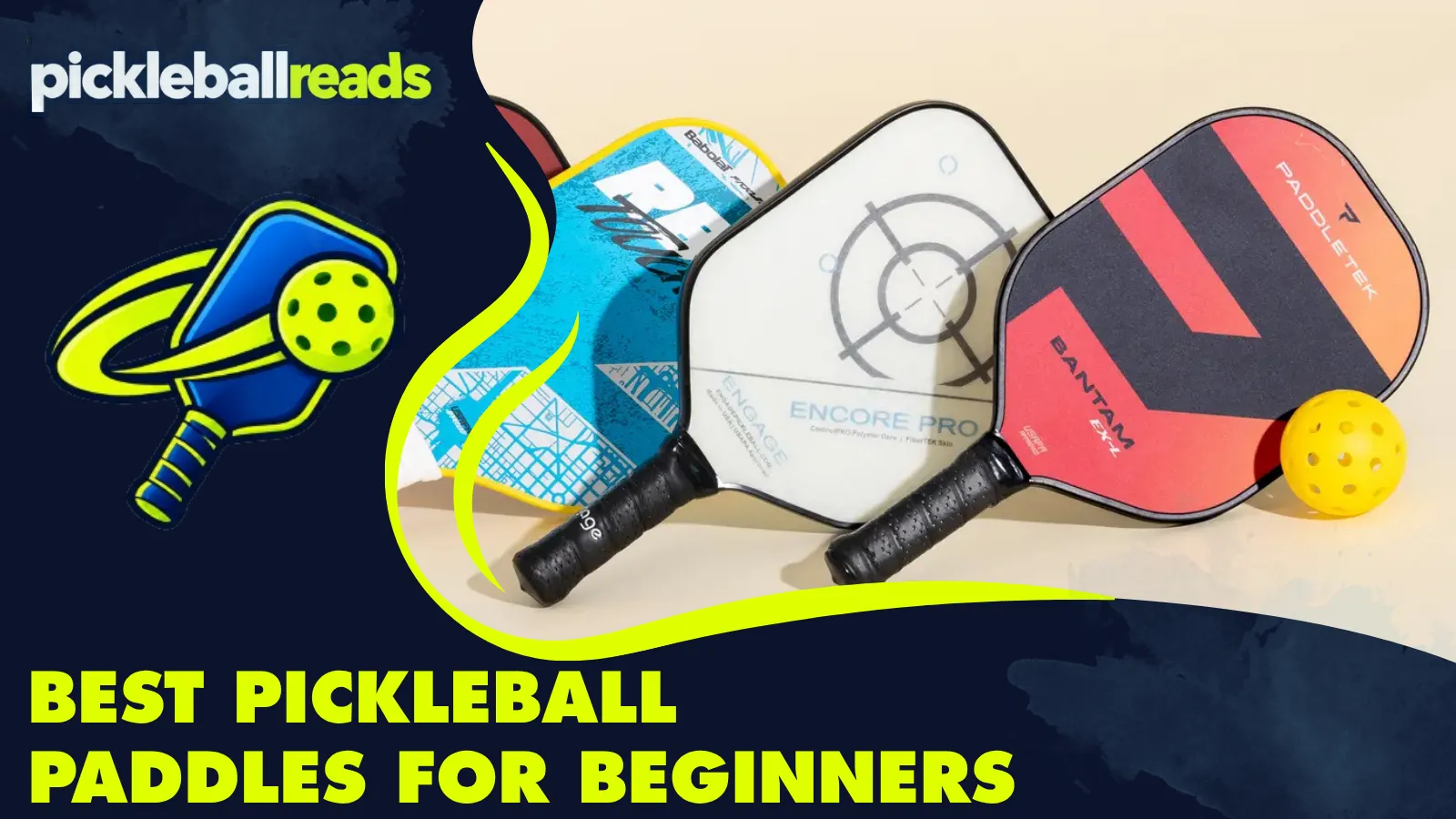

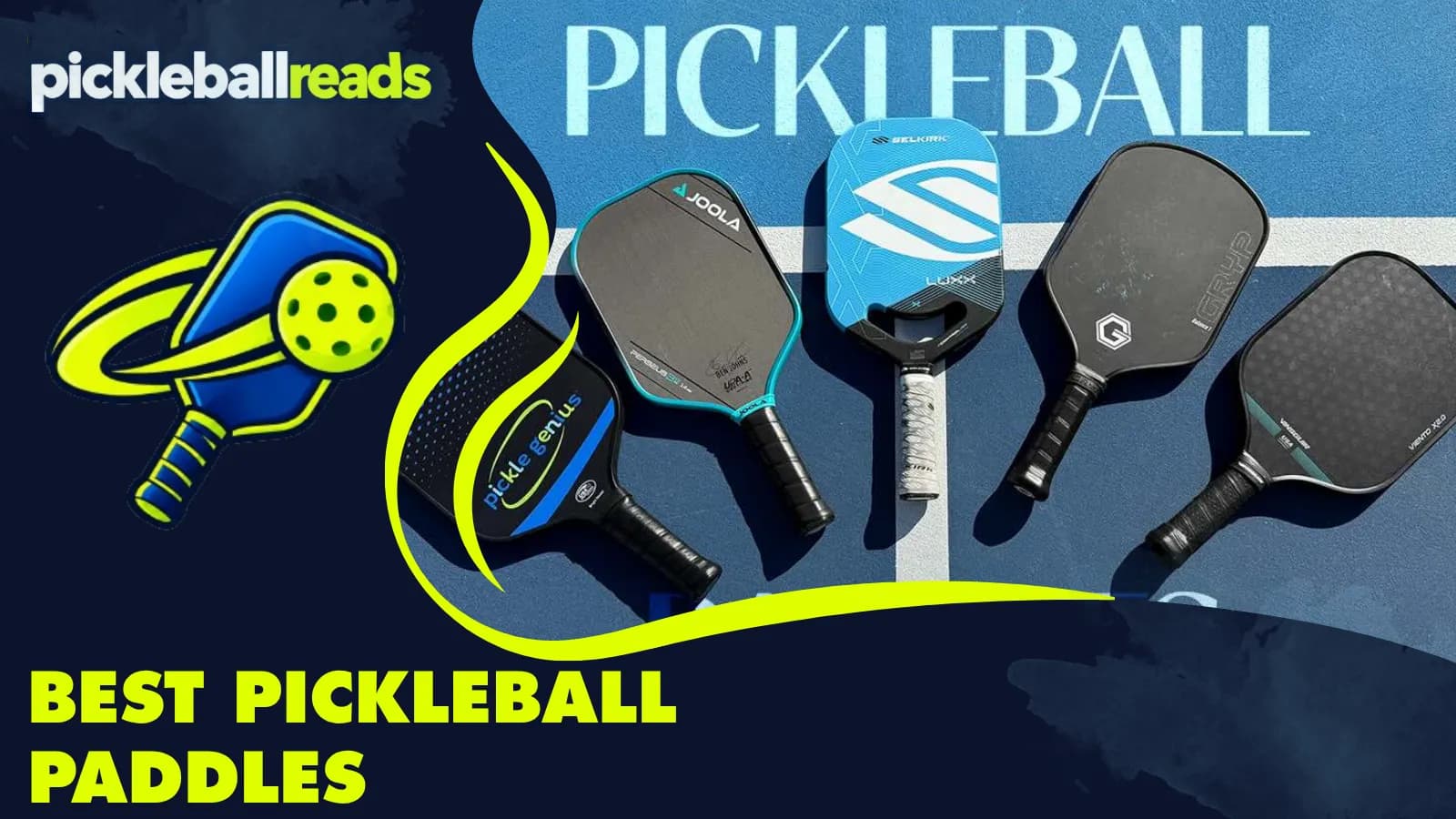
There is no single best pickleball paddle for every player. There is a best paddle for your game, your swing, and your budget, and the fastest way to find it is to stop shopping by brand first and start by category.
This guide follows Matt's Pickleball, the first competitor in this set. That means direct language, tested claims labelled as tested claims, and rules kept separate from advice. Where a point comes from the official rulebook, this guide says so. Where a point comes from a reviewer measurement or a price list, this guide says that too. That distinction matters, because most paddle guides blur it, and a blurred guide costs you money.
The four categories used here are the ones the top guides use, because they match how players actually play: power, all-court, control, and budget. The best pickleball paddles in this guide are grouped by those categories, not by brand. Pick your category first. Then pick a shape, a weight feel, and a price you can live with.
Start With Your Category, Not a Brand
Power paddles give you pace on full swings, serves, and overheads. They suit players who already generate control with their swing and want more output. They punish a loose swing, because pace without placement sends balls long.
All-court paddles balance power and control. They do not win one category by a large margin, and they do not lose one category by a large margin either. Pickleball Studio makes this point plainly: all-court paddles are a good default for players who do not know what they want yet, and for players who play a balanced game. Most players, in my view, would play better with an all-court paddle than with a power paddle they cannot control.
Control paddles give you touch, resets, dinks, and placement. They suit players who win with consistency, soft hands, and court position rather than raw pace. They will not bail out a short swing on a drive, but they will keep more balls in play.
Budget paddles are not a separate style. A budget pick is a power, all-court, or control paddle that costs less. Pickleball Effect makes this useful point by repeating three of its category picks in its budget list. That is honest. A good paddle does not stop being good because it is cheap, and a cheap paddle is not automatically a budget pick if it plays badly.
If you are new to the game, start with the all-court or control section, and read the beginners guide linked at the end of this article. If you already know your game, jump to your category.
Matt's Ten Picks, In Plain Terms
Matt's guide, updated October 26, 2026, gives ten picks, sorted by price, most expensive first. Matt is clear that he is not ranking them. Every one is a paddle he picked up, played a few games with, and did not want to put down. That is the right way to read this list: a shortlist, not a podium.
The ten, in Matt's order, are the Friction Pro Hybrid Flat-Top V2 16mm from RPM Pickleball, the CMD HYB 16mm from Volair, the Spitfire Elongated 16mm from Spartus, the Jade Elongated 16mm from RPM Pickleball, the Ultre Power 2 16mm from 11SIX24 Pickleball, the Omni Widebody 16mm from Selkirk, the Turbo MPP ArmorGrit Hybrid 16mm from Enhance Pickleball, the Coral Hybrid 16mm from Six Zero Pickleball, the J2CR Crystal Blue Long Handle 16mm from Honolulu Pickleball Co., and the Unmarked 2026 16mm from Mark Pickleball.
Notice the overlaps. The Volair, Spartus, Six Zero, Honolulu, and Mark names also appear in the Studio or Effect lists in this guide, in different models or categories. That overlap does not prove one model is best. It tells you those brands keep appearing across independent shortlists, which is a reason to research the exact model, not a reason to skip the shape, swing weight, and grip checks below. Matt also gives you the structure for those checks, in his own headings: pick by what you play, the four numbers that change how a paddle plays, and paddle shapes and the spin myth. This guide follows that structure, in plain language, in the next sections.
What Actually Matters First When You Compare the Best Pickleball Paddles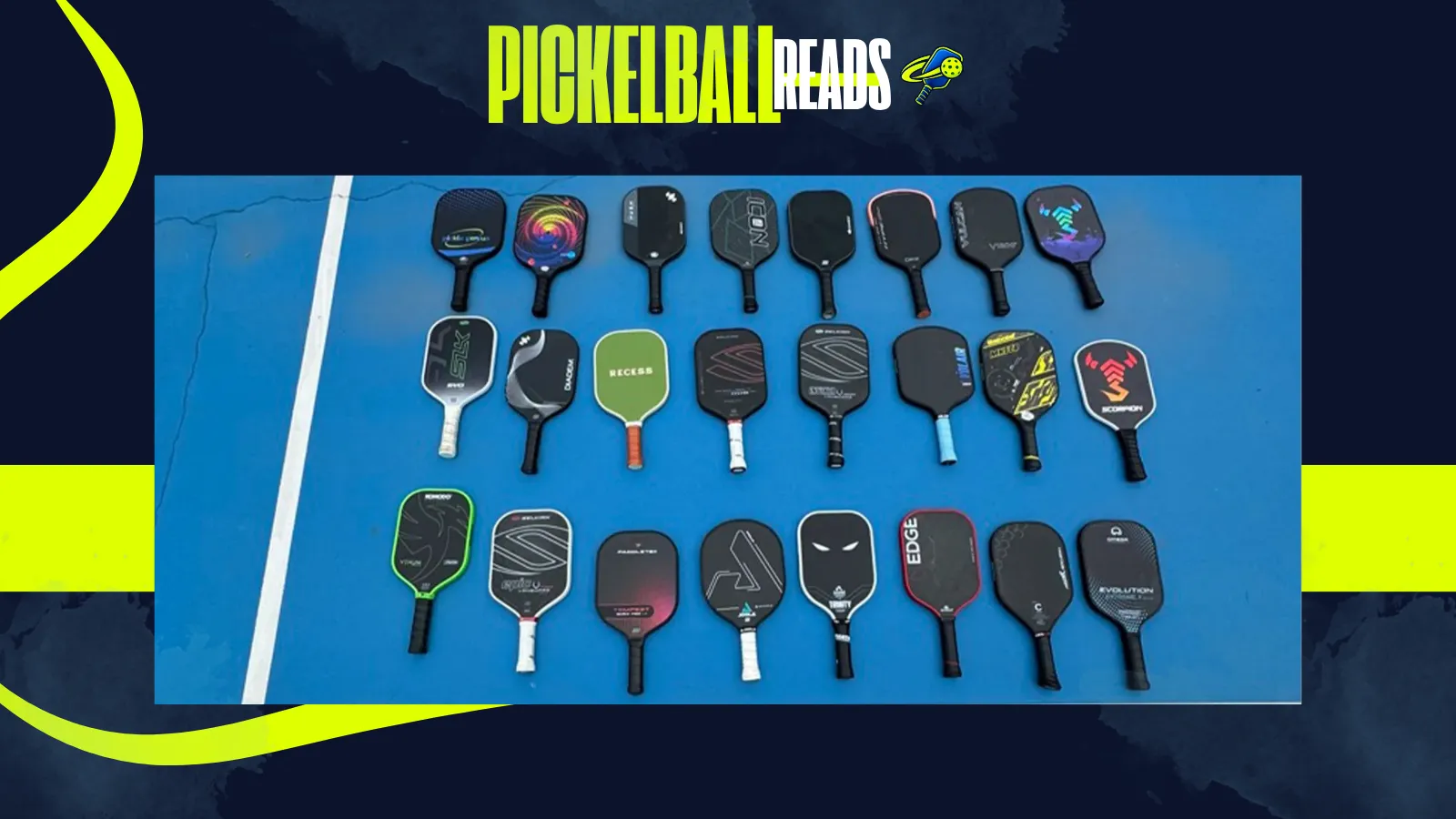
Matt's Pickleball puts swing weight first, and that is the right order. Swing weight is how heavy a paddle feels once it is moving. It is not the same as static weight, which is the number printed on the box. Static weight tells you how heavy the paddle is on a scale. Swing weight tells you how it feels on a swing, at the net, and on a reset.
Matt's measured data, from the text of his general guide, gives a useful sense of scale. Of the paddles he weighed, 80 percent land between 7.8 and 8.2 ounces in static weight, and his full catalog spans 7.3 to 8.9 ounces. That is a narrow range. It also explains why static weight alone does not choose a paddle for you. In Matt's data, static weight and serve speed are uncorrelated. Pick on swing weight and feel instead, and use static weight only as a second check.
Twist weight is the next number worth knowing. It measures how much a paddle resists twisting on off centre hits. In Matt's data, widebody shapes average 6.9, hybrid shapes average 6.5, and elongated shapes average 6.2. That is why a widebody feels more forgiving on mishits, and why an elongated paddle gives you reach but punishes contact away from the centre. You do not need to memorise these numbers. You need the idea: forgiveness comes from shape and twist weight, not from a brand name.
Shape matters in the same way. A widebody, also called a standard shape, has the largest sweet spot and the easiest handling. A hybrid shape sits between widebody and elongated, with a little more reach and a little less forgiveness. An elongated shape gives you reach and leverage, but it asks for cleaner contact. Matt's data also gives a useful correction to a common claim: in his measurements, shape barely changes spin. Elongated paddles averaged 2226 RPM, hybrid paddles averaged 2228 RPM, and widebody paddles averaged 2228 RPM. Choose shape for sweet spot and reach, and choose face texture and swing for spin, not shape alone.
Core thickness is a feel choice, not a rule. A 16mm core is thicker, softer, and more controlled. A 14mm core is thinner and livelier, with more pop. Most players who want control should start at 16mm. Players who want more pace, and who already control their swing, can try 14mm later. There is no official rule on thickness, as the rules section below makes clear.
Grip size and handle length are fit checks, not specs to admire. Hold the paddle in your normal grip. Check whether the index finger of your other hand fits in the gap between your fingertips and your palm. If it fits snugly, the grip is about right. If there is no room, size down. If you are between sizes, choose the smaller size, because you can build it up with overgrip tape. If you use a two handed backhand, check handle length too. A short handle will fight you on every two handed shot.
The Official Paddle Rules, Separated From Advice
This section is short on purpose. It contains only what the 2026 USA Pickleball Official Rulebook says, in Section 3.D. Everything else in this guide is advice, measurement, or price information, and it is labelled that way.
Combined length and width, including any edge guard and butt cap, must not exceed 24 inches. Length alone must not exceed 17 inches. There is no restriction on paddle thickness. There is no restriction on paddle weight.
Brand and model must be clearly marked, with the USA Pickleball Approved seal or text treatment. Paddles made before that requirement must still be on the approved list for sanctioned play. The paddle must be made of safe, rigid, non compressible material meeting the USA Pickleball Equipment Standards Manual.
The hitting surface must not contain holes, cracks, delamination, or indentations that break the surface. It must not contain rough texturing, sandpaper characteristics, rubber, moving parts that increase head momentum, anti skid or sand textured paint, or any material that causes additional spin. It must not have a reflective finish that could affect opponents.
For the full wording, see the USA Pickleball Official Rulebook. For pro PPA Tour and Major League Pickleball events, there is a separate certification system, and the UPA-A Approved Paddles list is the list to check for those events.
The practical point is simple. Weight, thickness, swing weight, twist weight, grip size, and shape are buying choices, not rulebook limits. Size, material, surface, and approved list status are the rulebook points. For sanctioned play, check the exact brand and model on the approved list before you buy, because approval status can change, and because some models are approved in one thickness and not another. For casual play, the same check is still good practice, but it is not a legality test for a friendly game.
Best Power Pickleball Paddles
Power paddles are for players who can already place the ball and want more pace. If your balls already sail long, a power paddle will make that problem worse, not better. Buy power only when control is already there.
Pickleball Effect lists six power picks in its hot list, updated August 26, 2026: 11SIX24 Power 2 Ultre, Thrive Ignite Hybrid, Pickleball Apes Zen S+, Honolulu J2CR Crystal Blue Endurance, Mark UnMarked 2026 Elongated, and Spartus Spitfire Elongated. These are Effect's picks, not a rulebook list, and Effect does not rank them as a single winner. Treat them as a shortlist to research further, not as a verdict.
Two names in that list also appear in Matt's measured data, and that overlap is worth noting. Matt's fastest measured serve speed, in the text of his general guide, is the 11SIX24 Ultre Power 2 16mm at 61 mph, radar gun tested on his protocol. Matt's highest measured spin, in the same guide, is the Honolulu J2CR Crystal Blue Long Handle 16mm at 2471 rpm, camera measured on his protocol. Those are Matt's measurements, on his test method, not official ratings. They do not mean those paddles are best for you. They mean those paddles measured high on those two tests, and you should still check shape, swing weight, grip, and price before you buy.
A power paddle buyer should pass on a paddle that feels head heavy at the net, even if it feels great on a drive. Most points are won and lost at the net, not on a full swing. If your hands slow down at the kitchen, the extra pace on a drive is not worth it.
Best All-Court Pickleball Paddles
All-court paddles are the centre of this guide, because they fit the most players. They give you enough power for serves and groundstrokes, enough control for dinks and resets, and enough forgiveness for off centre contact. If you do not know your category yet, start here.
Pickleball Studio lists four all-court picks, and Pickleball Effect lists five. The overlap is useful, because two different reviewers landing on similar shapes tells you more than one list alone.
Studio's four picks, with Studio's prices from its page on October 27, 2026, are the Six Zero Coral at $199, the Honolulu J2FC+ at $195, the Vatic Pro Saga at $99, and the Franklin Dynasty 16mm at $229. Check current retailer prices on the day you buy, because these prices change, and Canadian prices in Canadian dollars will differ.
Studio describes the Coral as a dense, soft feeling full foam paddle that makes placement easy, with solid power on full swings but without excessive pop, which makes resets and dinks easier. Studio also notes, honestly, that the Coral's Diamond Tough grit durability was still being tested at the time of its page, so it does not claim that grit as a proven selling point yet. That is the kind of note to trust. A guide that admits what it does not know yet is more useful than a guide that claims everything.
Studio describes the J2FC+ as a hybrid shape with one of the most forgiving sweet spots in its range, with a dense, soft foam feel and good dwell time, and as a paddle that is largely ready to go out of the box without customising. For a player who does not want to add weight or change grips on day one, that matters.
Studio describes the Saga as a polymer core paddle, not foam, at a lower price than the competition, with every shape and handle length a buyer could ask for, and a core design that is not prone to giving issues over time. Studio's verdict is plain: it does nothing flashy, but it is a paddle anyone can pick up and play good pickleball with. That is a strong all-court recommendation, because it does not oversell one feature.
Studio describes the Dynasty as a Gen 3 construction paddle that does not play like a typical Gen 3 paddle, because it does not bring huge pop and power. Studio notes a lower swing weight of 115 for an elongated paddle, and recommends adding weight around 3 and 9 to bring out full sweet spot performance. That is a useful warning. A paddle that needs weight to reach its best is not a bad paddle, but it is not a simple out of the box pick either.
Effect's five all-court picks are the Six Zero Coral Pro Hybrid, the LUZZ Glider 2026, the Spartus P1 Standard, the Volair CMD Hybrid, and the SLK ERA Power Elongated. Note that the Coral Pro Hybrid is not the same model as Studio's Coral, so do not merge them into one pick. Check the exact model name before you buy, because similar names hide different cores, shapes, and prices.
For an all-court buyer, the shortlist test is simple. Play a dink rally, play a reset against a hard shot, then play a full drive. If one paddle handles all three without a weak spot you notice, it is an all-court paddle for you. If it only handles one of the three well, it belongs in a different category.
Best Control Pickleball Paddles
Control paddles are for players who win with placement, patience, and soft hands. They are also the right category for many improving players, because control is what keeps rallies alive long enough to learn.
Effect lists three control picks, updated August 14, 2026: 11SIX24 Jelly Bean 2 Vapor, Vatic Pro Prism Flash 16mm, and Chorus Shapeshifter HX. Again, these are Effect's picks, not a ranking with a single winner, and Effect gives no price for these picks in its hot list report. Check the retailer price, shape, and thickness for the exact model, because a name alone does not tell you the full spec.
A control buyer should look for three things: a soft, predictable response on dinks and drops, a stable face on resets, and a swing weight that keeps your hands fast at the net. A control paddle that feels slow at the net is not a control paddle in practice, no matter what the label says. If you have wrist or arm pain, get it checked, and do not buy a paddle to fix an injury.
Best Budget Pickleball Paddles
Budget is a price range, not a playing style, and the best budget advice in this set comes from Effect's structure. Effect repeats three category picks in its budget list: Spartus Spitfire Elongated from power, LUZZ Glider 2026 from all-court, and Vatic Pro Prism Flash 16mm from control, plus one budget only pick, Vatic Pro V-Sol Tour Flash. That structure tells you the truth about budget buying. The best budget paddle is usually a good category paddle that happens to cost less, not a separate cheap paddle built only to hit a price.
Studio gives the same lesson from the other side. Its Vatic Pro Saga at $99, from its page on October 27, 2026, is an all-court paddle at a budget price, with a polymer core and a full range of shapes. It is not a compromise paddle that only works for beginners. It is a real all-court paddle that costs less than the foam paddles above it.
Matt's general guide gives a useful budget anchor too. Matt's cheapest paddle on his list, in the text of his guide, is the Spartus Spitfire Elongated 16mm at $110. That is Matt's list price at the time of his guide, not a live retailer price, and it should be checked before you buy. It also shows why the Spartus name appears in both power and budget lists. A paddle can be powerful and cheap at the same time, and that combination suits a player who wants pace on a budget, but not a player who needs control first.
The budget rule is simple. Do not buy a two pack because it is cheap. Buy one good paddle, in the right category, at a price you can afford, and use it for a season. A cheap paddle that feels dead, twists on mishits, and needs replacing soon is not a saving. It is two purchases instead of one.
Price Versus Performance
Matt's price data gives a clear, honest picture, and it is worth reading before you spend more. In Matt's measurements, price buys power, and it often costs you control. Firepower, which Matt defines as the average of a paddle's serve speed and pop percentiles, climbs with price: 38 under $100, 39 from $100 to $149, 49 from $150 to $199, and 58 at $200 and up. Control score runs the other way, from 77 down to 59 across the same bands. Matt calls control score a beta metric and holds it loosely, and you should too. The direction is consistent, even if the exact numbers are not a final verdict.
Raw output barely moves with price in Matt's data. Paddles under $100 averaged 2200 RPM and 59.5 mph on serves, while paddles at $200 and up averaged 2257 RPM and 60.2 mph. Twist weight, the forgiveness number, does not track with price at all in Matt's data. The most powerful paddle Matt measured is $280, and fifteen paddles scored a perfect 100 on control in his data, with not one of them costing $200 or more.
Read that as a buying rule. Price buys power and materials, not control or forgiveness. If you need control, you do not need to spend $200 to get it.
What to Avoid
Buying for power or pop first. Control wins more games for most players than pace does.
Chasing spin as a shortcut. Learn placement and soft shots first, then let spin follow.
Copying the pros or your friends. A pro paddle is built for a pro swing, not yours.
Going too cheap or too expensive. Too cheap means a dead feel and an early replacement. Too expensive means paying for performance you cannot use yet.
Switching paddles every few weeks. Give a sensible paddle a season, so you learn how it responds.
Buying by a single number. One RPM number, one swing weight number, or one price does not choose a paddle. The combination of shape, feel, grip, and category does.
Ignoring the approved list for sanctioned play. Check the exact model, because a name that looks right can hide a thickness or version that is not approved.
How to Choose in Five Steps
Pick your category. Power, all-court, control, or budget, in that order of decision, not brand first.
Pick your shape. Start with widebody or hybrid for forgiveness, unless you already play clean, consistent singles and want elongated reach.
Pick your core thickness. Start with 16mm for control. Try 14mm later for more pop, once control is solid.
Check swing weight and grip by feel. Swing the paddle, hold it in your normal grip, and check handle length if you use a two handed backhand.
Check approval and price last, but check them both. Check the exact brand and model on the approved list for sanctioned play, and check the current retailer price on the day you buy, in United States dollars or Canadian dollars as applicable.
For a first paddle, see best pickleball paddles for beginners. For how the game works once you have a paddle, see how to play pickleball.
Frequently Asked Questions
What is the best pickleball paddle?
There is no single best paddle for every player. The best paddle is the one in the right category for your game, with a shape, swing weight, and grip that fit you, and with an exact model that is approved for sanctioned play if you play tournaments. Start with category, then shape, then feel, then price.
What is the most important spec when buying a paddle?
Swing weight, in Matt's view, and this guide agrees with that order. Swing weight is how heavy a paddle feels once it is moving, and it sets both pace on a full swing and hand speed at the kitchen. Static weight, the number on the box, tells you much less on its own, because most paddles in Matt's data fall in a narrow static weight range.
Do more expensive paddles play better?
It depends on what better means. In Matt's data, price buys power and costs control. Raw spin and serve speed barely move with price, and twist weight does not track with price at all. A more expensive paddle is not automatically better for your game. It is better only if it gives you the category, feel, and control you actually need.
Which paddle shape is most forgiving?
Widebody, also called standard shape. In Matt's data, widebody shapes average a higher twist weight than hybrid and elongated shapes, so a ball caught off centre holds its line better. You give up reach for that forgiveness, which is a fair trade for most players.
How often should I replace a paddle?
There is no mileage number on a paddle. Replace it when it is cracked or crushed, when you have lost spin, when the ball comes off dead, or when it suddenly plays hotter than it did when new. A paddle that gains pace out of nowhere may have a crushed core, and it is on the way out rather than getting better. Past that, it is preference. If it stopped clicking for you and you are ready to move on, that is reason enough.
Conclusion
Best pickleball paddles are not a single model, a single brand, or a single price. They are a category choice, a shape choice, and a feel choice, made in that order, with the official rules checked separately from the advice.
Start with all-court if you are unsure, control if you win with touch, power only if you already control your swing, and budget by finding a good category paddle at a lower price, not by buying a cheap two pack. Check swing weight and grip by feel, check the exact model on the approved list for sanctioned play, and check the current retailer price before you buy. Use one sensible paddle for a season, and upgrade only when you can name a specific limit of the paddle you have.