
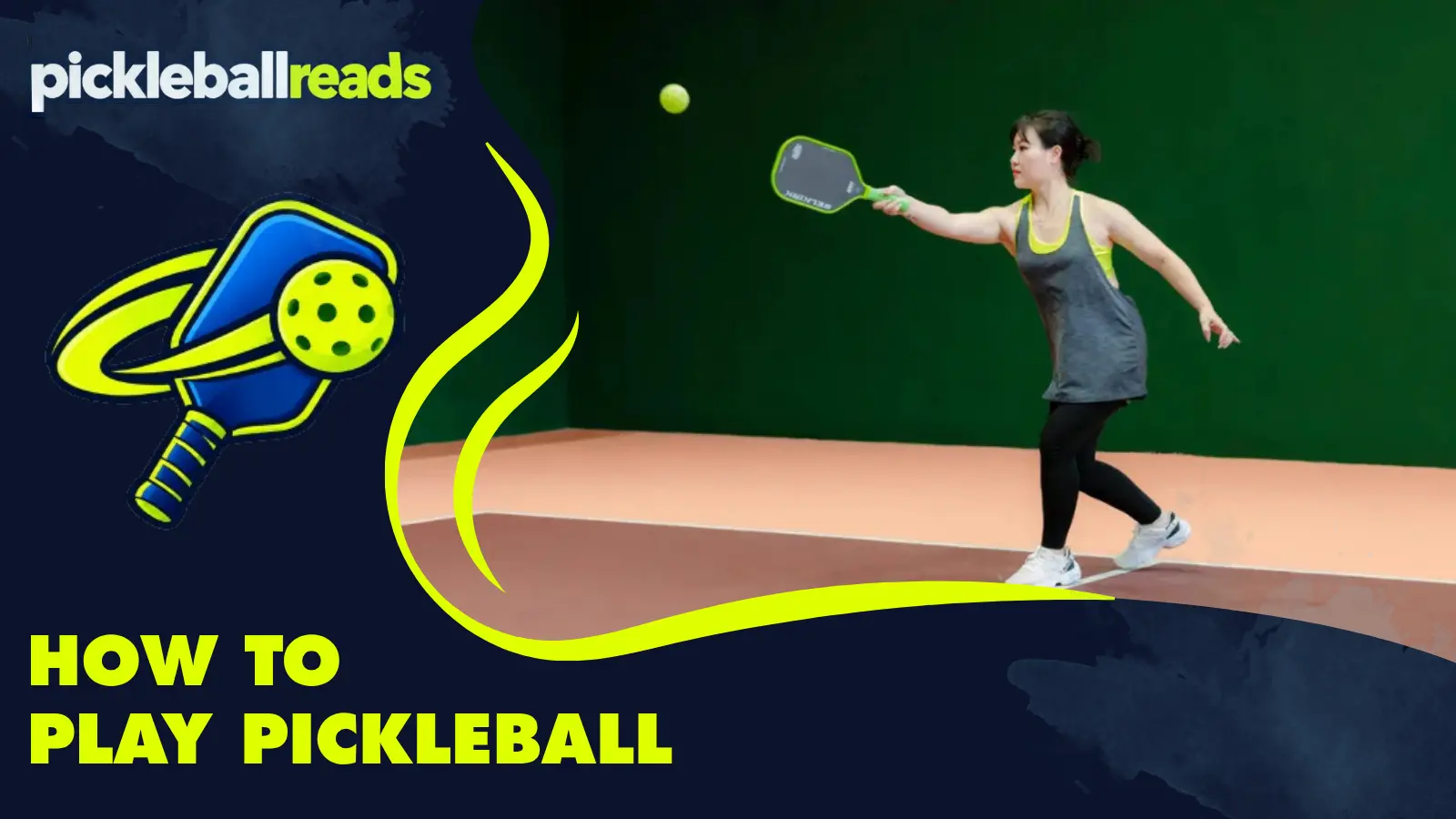
How to play pickleball is simpler than it looks from the sideline. You serve underhand and diagonally, you let the ball bounce once on each side, you stay out of the kitchen when you volley, and you play to 11 points, win by 2. That is the whole game in one breath.
This guide follows the direct, rule first tone of the first competitor, UTR Sports: short rules, plain words, no hype. UTR Sports gives only a numbered list, so the walkthrough uses USA Pickleball and The Picklr structure. Every rule below was checked against the USA Pickleball Official Rulebook 2026.
How to Play Pickleball in 6 Steps
Grab a paddle and a ball. The paddle is solid, a little bigger than a table tennis paddle. The ball is plastic and full of holes, like a wiffle ball.
Serve underhand and diagonally. Stand behind the baseline, hit the ball below your waist, and aim for the service box across the net from you.
Let it bounce twice. The receiving side lets the serve bounce, and the serving side lets the return bounce. After those two bounces, anyone can hit the ball in the air.
Stay out of the kitchen on volleys. You cannot hit a volley, a ball out of the air, while standing in the seven foot zone next to the net.
Keep the rally going. Hit the ball back over the net and inside the lines. The rally ends when someone faults or the ball bounces twice.
Score only on your serve. In traditional scoring, only the serving side can win points. First side to 11 wins, as long as you are ahead by 2.
What Is Pickleball?
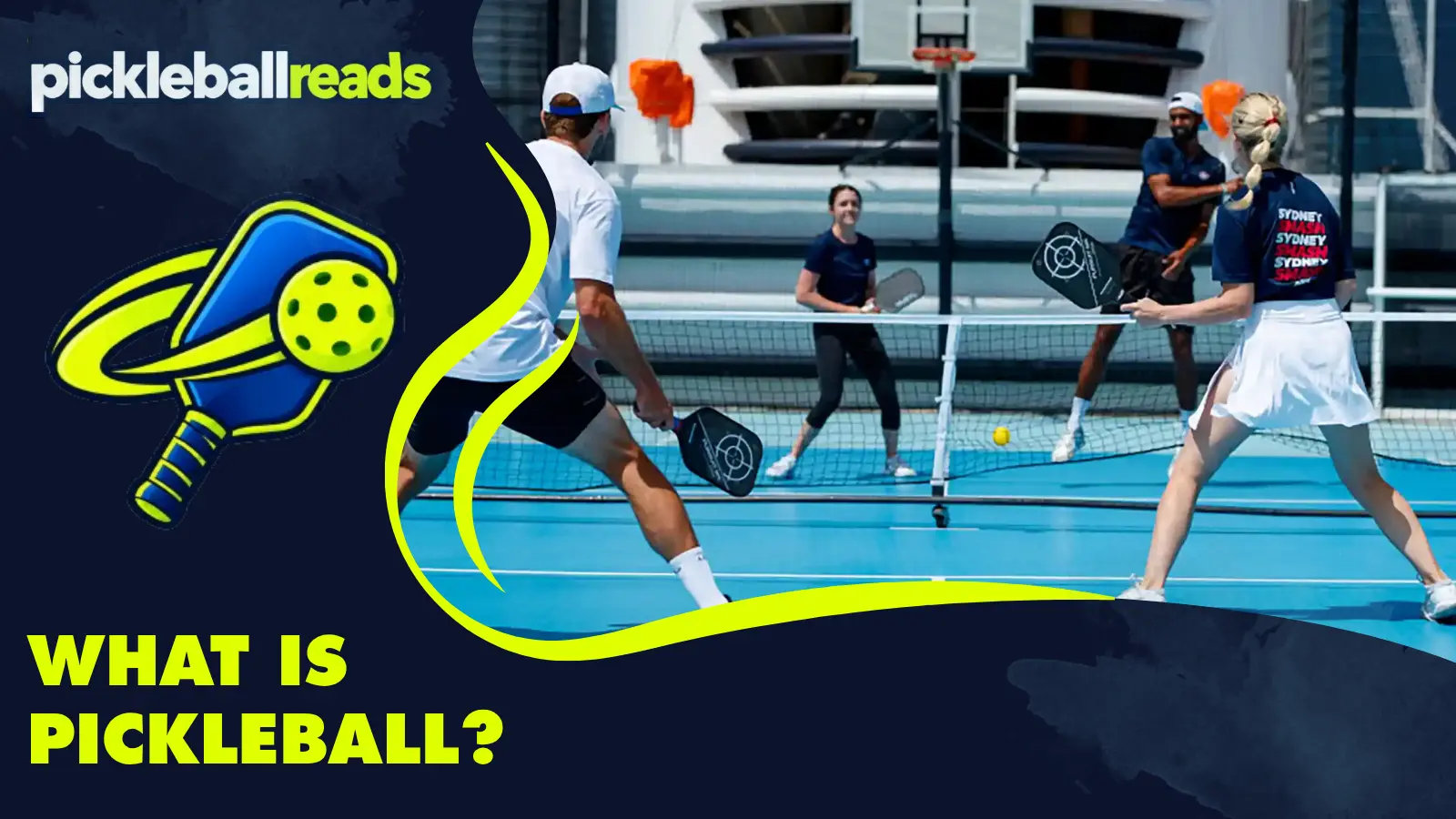
Pickleball is a paddle sport that blends tennis, badminton and table tennis. It was invented in 1965 on Bainbridge Island, Washington, when Joel Pritchard and Bill Bell improvised a game using ping pong paddles, a perforated plastic ball and a lowered badminton net. Barney McCallum joined the following weekend, and the three men created the first rules together. For the full backstory, see what is pickleball.
Joan Pritchard said the mix reminded her of the pickle boat in crew, a boat made up of leftover rowers. The popular dog story has the order backwards: Pickles came after the game was named, and was named after the game.
Pickleball is the fastest growing sport in the United States, with 19.8 million Americans playing in 2024, up 45.8 percent from 2023, according to the Sports and Fitness Industry Association. USA Pickleball sets the official rules in the United States. Pickleball Canada posts and follows the same 2026 Official Rulebook, so these rules apply in Canada too.
What You Need to Play Pickleball
A paddle. Solid faced, larger than a table tennis paddle, smaller than a tennis racket. Many clubs lend demo paddles. See the best pickleball paddles for beginners.
A ball. Plastic with holes. Indoor balls have larger holes and fly slower. Outdoor balls have smaller holes and hold up better in wind.
A court and net. The net sits 36 inches high at the sidelines and dips to 34 inches in the middle.
Court shoes. Court shoes give you side to side grip and support. The rulebook only requires non marking soles, so treat court shoes as advice, not as a rule.
Comfortable clothes. Wear clothes you can move in. Your clothing should not closely match the color of the ball.
Get to Know the Pickleball Court
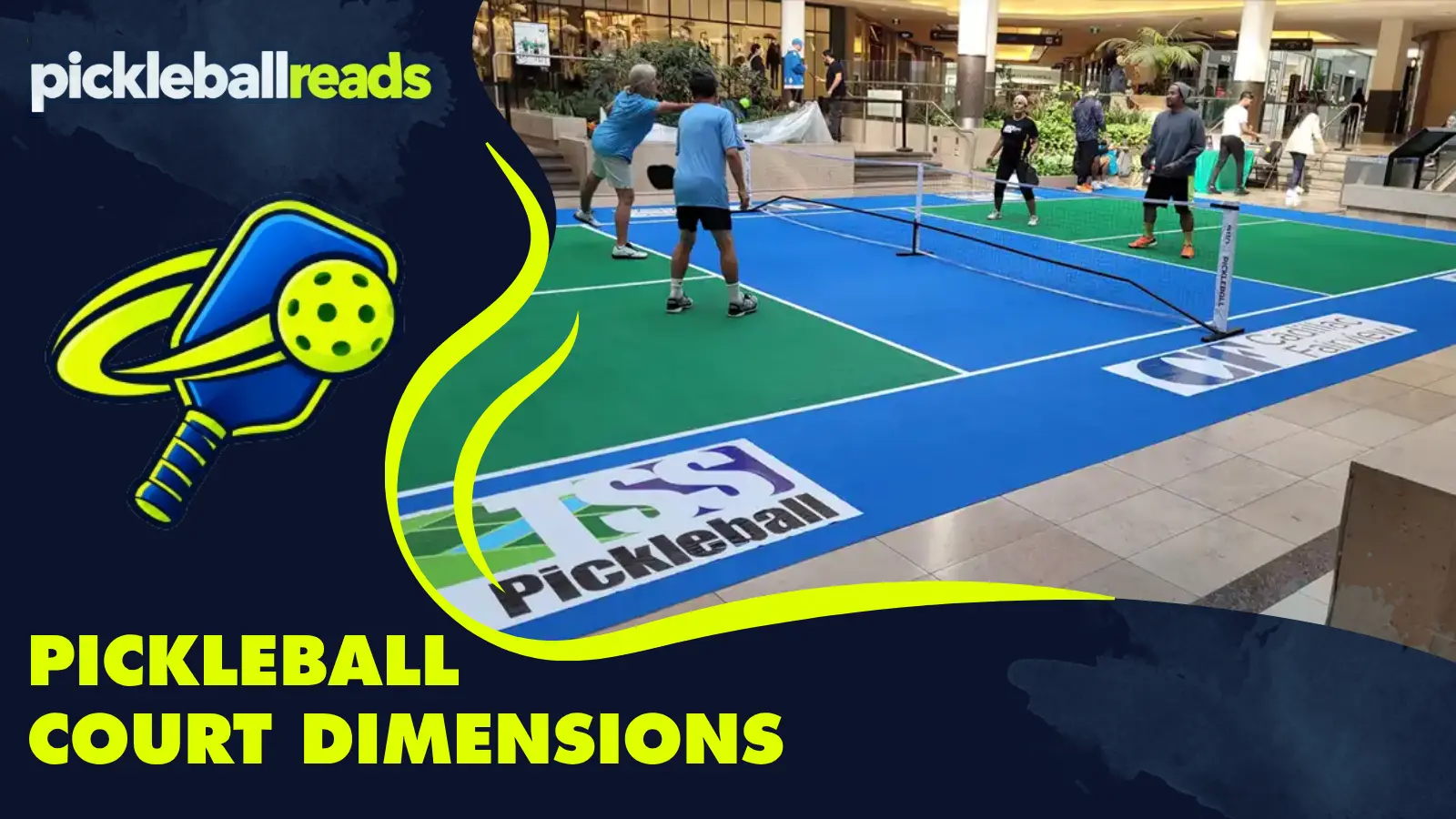
A pickleball court is 20 feet wide and 44 feet long, the same as a doubles badminton court, for singles and doubles. Know the kitchen, seven feet on either side of the net; the service courts, split into right and left boxes; the baseline; and the centerline and sidelines. For every measurement, see pickleball court dimensions.
The 7 Main Rules of Pickleball
1. Every rally starts with a serve, hit diagonally into the opposite service court.
2. The ball must bounce once on each side before a volley. This is the two-bounce rule.
3. Rallies continue until a fault, such as a shot out, into the net, or bounced twice.
4. You cannot volley in the kitchen, including on the kitchen line.
5. You only score on your serve, in traditional scoring.
6. Call the score before each serve. Doubles uses three numbers, explained below.
7. Games are played to 11, win by 2, so a game can end 12-10 or 15-13.
How to Serve in Pickleball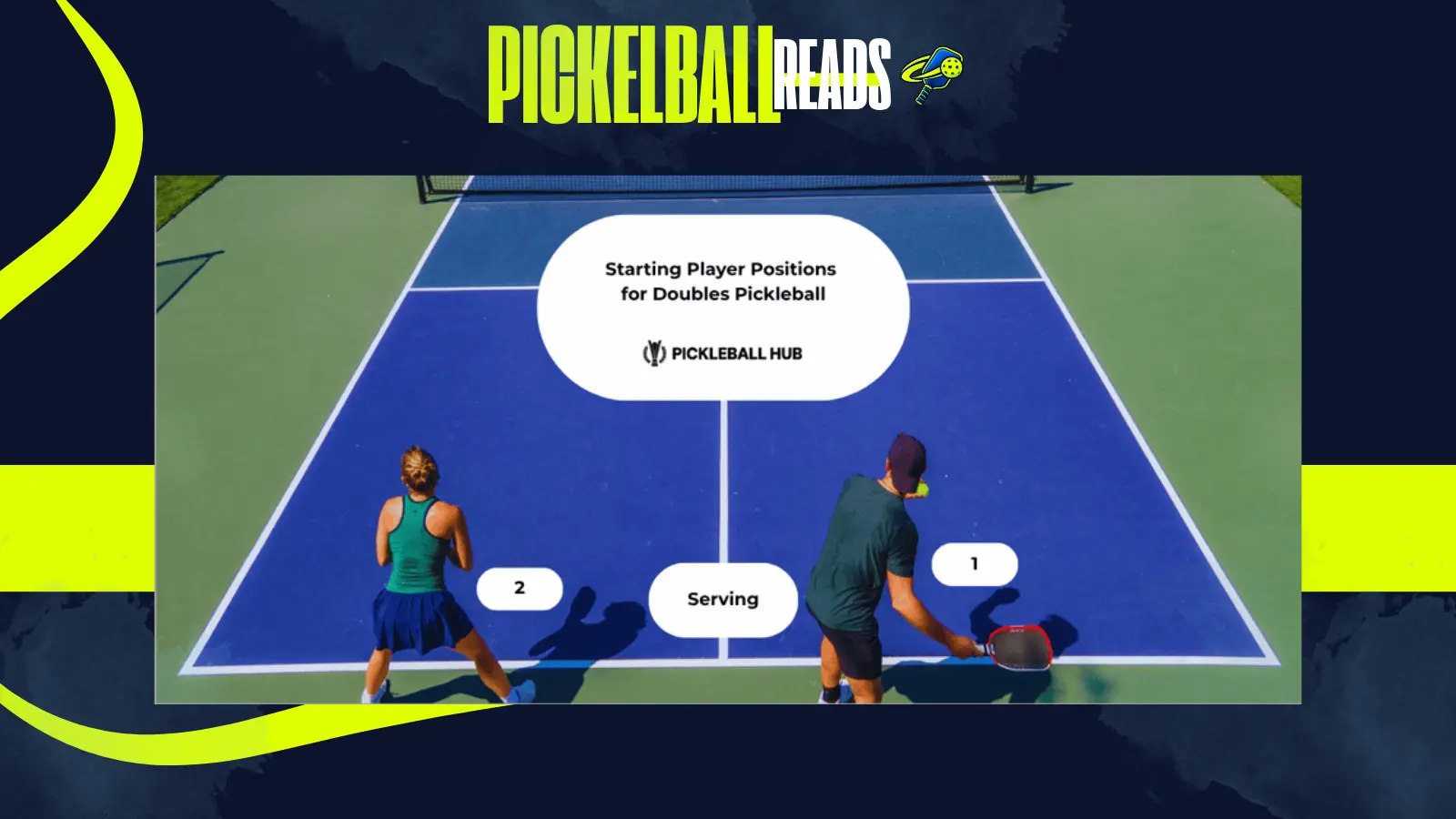
You serve underhand, contacting the ball below your waist, and you hit it diagonally into the service box across the net. You serve from behind the baseline, and you get one attempt. There is no second serve like in tennis.
For a volley serve, your arm must move in an upward arc, the paddle head must not be above your wrist, and contact must not be above your waist. Use waist, not navel: below the navel would be stricter than the official rule. At contact, at least one foot must be behind the baseline, and neither foot may touch the court or outside the sideline or centerline extensions.
The serve must clear the kitchen. A serve in the zone, or on the kitchen line, is a fault, because the line is part of the zone. A serve on the baseline, sideline, or centerline is in. A serve that clips the net and lands in the correct box is live. There is no let replay.
A drop serve, where you drop the ball and hit it after one bounce, is legal and easier for beginners, and the volley serve limits do not apply to it. For the full rule set, see the USA Pickleball Rule. Paddle spin at contact is legal, pre-spin on release is not.
The Two-Bounce Rule
After the serve, the ball has to bounce once on each side before anyone can hit it out of the air. The server serves, the receiving side lets it bounce and returns it, the serving side lets that return bounce and hits the third shot. Only then can either side volley.
A second bounce on one side before the return is a fault. The rule keeps the serving side from rushing the net, gives both sides a fair start, and is why the third shot, usually a soft drop into the kitchen, matters so much.
The Kitchen: Pickleball's Most Important Rule
The kitchen, or non-volley zone, is the seven foot area on each side of the net. You cannot hit a volley while touching the kitchen or its line, but you can step into it anytime.
The catch is momentum. If your follow through carries you into the kitchen after a volley, that is a fault, even if the ball is already dead. After being in the kitchen, you must reestablish both feet outside before volleying again. You may enter the kitchen to hit a ball after it bounces, and you may stand in it as long as you are not volleying. See what is the kitchen in pickleball.
Advanced note only: the Erne, spelled E-r-n-e, is a legal volley from outside the sideline, beside the kitchen, by jumping over the corner or running around it. A player who ran through the zone must reestablish both feet outside before volleying.
Faults in Pickleball
A fault stops play because of a rule violation. In traditional scoring, a receiving fault gives the serving team a point, and a serving fault gives up the serve or causes a side out.
A fault occurs when a serve does not land in the receiving court, the ball is hit into the net, the ball is volleyed before a bounce on each side, the ball is hit out of bounds, a ball is volleyed from the non-volley zone, a ball bounces twice before being struck, a player or clothing or paddle touches the net or net post when the ball is in play, there is a service rule violation, a ball in play strikes a player or anything worn or carried, or a ball in play strikes a permanent object before bouncing. This is a beginner safe list, not the complete rulebook list.
Line calls are simple. A ball on any line, except the non-volley zone line on a serve, is in. A serve on that line is a fault. A ball that cannot clearly be called out is in, and the opponent gets the benefit of the doubt.
How to Keep Score in Pickleball
In traditional scoring, only the serving side can score. Win a rally while receiving and you get the serve, not a point. Games are to 11, win by 2.
In doubles, call three numbers before every serve: your team score, the other team score, and first or second server. So 4-2-1 means your side has 4, the other side has 2, and you are the first server. Every game starts at 0-0-2, because the starting team gets only one server at the start, not two. That keeps the start fair.
If the serving team wins the rally, they earn a point and switch sides. If they lose the rally, no points are awarded and the serve passes on. In doubles, each player gets a turn before a side out, except for the first sequence. In singles, even scores serve from the right, odd scores from the left, and only two numbers are called.
Traditional Side-Out Scoring and Rally Scoring
Traditional side-out scoring is the standard format most beginners learn first. Under rally scoring, every rally scores, regardless of who served. In the 2026 rulebook, rally scoring remains a provisional tournament director option, with a two number call and one server per side in doubles. Every rally now ends with a point, including the game winning rally. The older 2025 limit, game point only on serve, is gone in 2026. Confirm the format before play. For worked examples, see pickleball scoring rules.
Essential Pickleball Shots
These are shot names, not rulebook terms, except volley, hitting the ball out of the air before it bounces.
Serve: Underhand shot that starts the rally.
Drive: Fast paced shot from the baseline.
Dink: Soft shot that lands in the kitchen.
Volley: Shot before the ball bounces, outside the kitchen.
Drop shot: A soft shot from the baseline that lands in the kitchen.
Lob: High shot that sends opponents backward.
Overhead: Hard shot, like a tennis smash, used against lobs. You can smash outside the kitchen.
Singles vs. Doubles: How Many People Do You Need?
Two people for singles or four for doubles. Doubles is far more common, easier on your legs, more social, and what you will see at almost every open play session. The rules are nearly identical. The biggest difference is scoring: singles uses two numbers instead of three, since there is no partner and no second server to track. Start with doubles. You will get more reps, more rallies, and more time to learn.
7 Common Mistakes New Players Make
The first three are faults, the rest are advice.
Volleying in the kitchen. Hitting a ball out of the air with a foot on the line is a fault.
Forgetting the two-bounce rule. Crashing the net on the return is a fault.
Not calling the score. In doubles you must call all three numbers before serving.
Standing too far back. The point is usually won at the kitchen line.
Hitting too hard. Soft shots into the kitchen win more points than bangers.
Using the wrong shoes. Wear court shoes. This is advice, the rulebook only requires non marking soles.
Trying to win every point with a smash. Patience beats power.
Pickleball Etiquette
USA Pickleball etiquette tips, as guidance not faults: call out balls loudly and clearly, but only if certain; call the score before each serve; tap paddles after the game. When in doubt, give your opponent the benefit of the doubt.
Where Can You Play Pickleball, and What Does It Cost?
Public parks and rec centers are the most common place to begin, usually free or close to it, though court time is first come, first served. Check local listings, because free access varies. You can convert a tennis court with tape and a portable net, but lower the net to 36 inches at the sidelines and 34 inches at the center. Indoor club memberships vary in price.
Frequently Asked Questions About How to Play Pickleball
How many people do you need to play pickleball?
Two for singles or four for doubles. Doubles is more common and easier to start, since you only cover half the court.
How many points do you play to in pickleball?
Standard games go to 11 points, win by 2. Some tournaments play to 15 or 21, but 11 is the norm for recreational play.
Do you have to win by 2 in pickleball?
Yes. If the score reaches 10-10, play continues until one side leads by 2, so a game can end 12-10, 15-13, or higher.
Can you play pickleball on a tennis court?
You can, using temporary lines and a portable net, or a lowered net at 36 inches at the sidelines and 34 inches at the center. Do not rely on an exact count of courts per tennis court without a conversion guide, because the count depends on layout and runoff space.
Conclusion
There you have it. Serve underhand and diagonally, let it bounce once on each side, stay out of the kitchen on volleys, call the score before you serve, score only on your serve in traditional play, and play to 11, win by 2. Grab a paddle and find a court.