
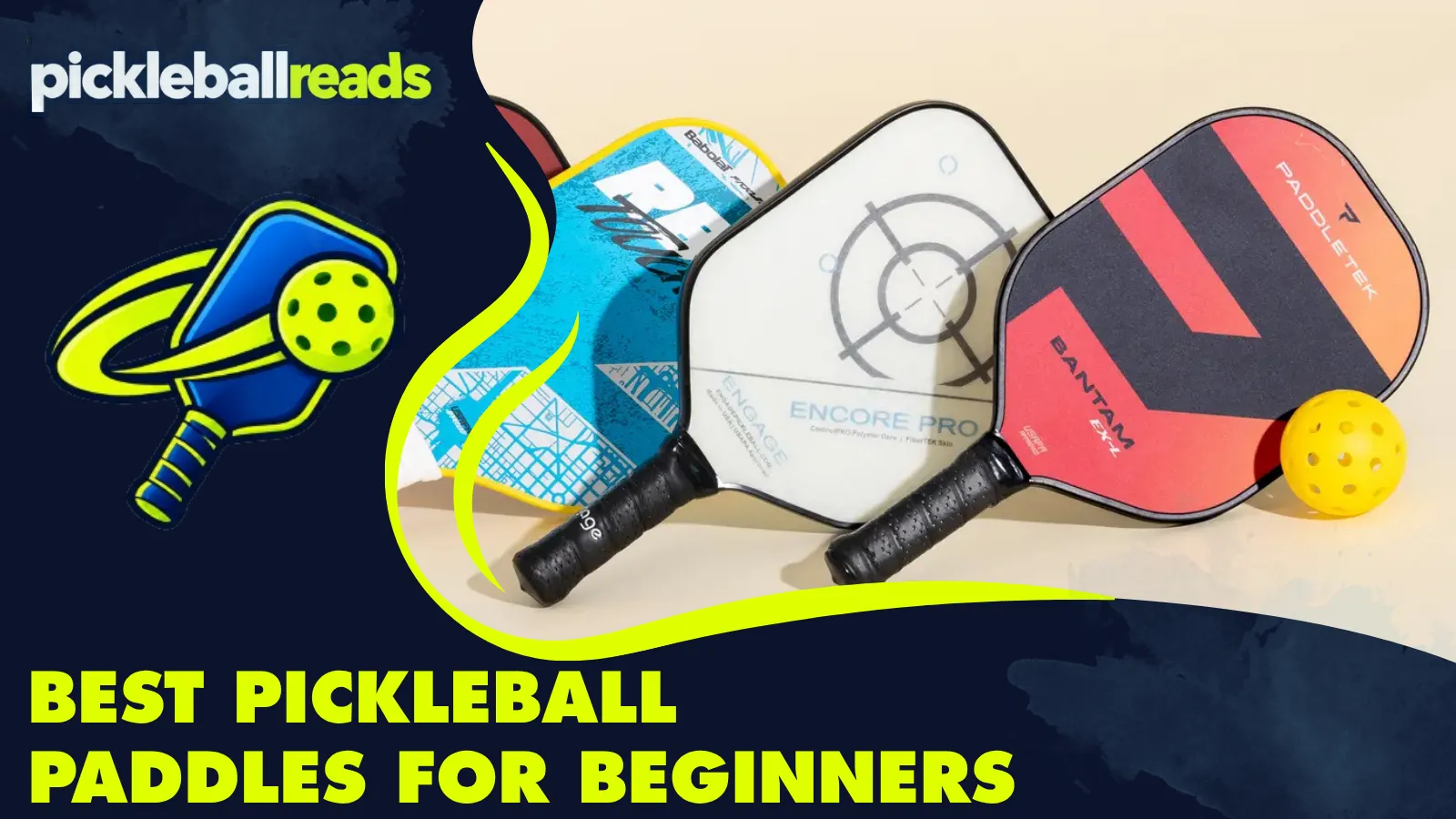
Best pickleball paddles for beginners are not the fastest, most expensive, or pro paddles. They are the paddles that help a new player keep the ball in play, learn control, and enjoy the game without fighting the equipment.
This guide follows Matt's Pickleball, the first competitor in this set: direct, tested, and focused on what actually matters. Where a point is a rule, this guide says so. Where a point is advice, this guide says so too. That distinction matters, and most beginner guides blur it. Sanctioned play in the USA and Canada follows the 2026 USA Pickleball Official Rulebook, and the paddle rules used here come from that book.
What a Beginner Paddle Should Do First
A beginner paddle should forgive, control, and feel comfortable, in that order.
Forgiveness means a large sweet spot. When you hit slightly off centre, as every beginner does, the ball should still go roughly where you aimed. A widebody or standard shape gives you that margin.
Control means a predictable response. A control paddle lets you dink softly, reset a hard shot, and place the ball without guessing how far it will fly. Power can wait. Control cannot be added to a paddle that does not have it.
Comfort means a weight and grip you can use for a full session without your wrist or arm tiring early. Choose control and forgiveness first, and let power wait.
How Much Should a Beginner Spend
Matt's Pickleball gives useful price tiers. They are recommendations, not official rules. Check current retailer prices on the day you buy, because prices change, and Canadian prices in Canadian dollars will differ from United States prices.
Under 50 dollars: the false economy. Cheap two packs often feel dead, twist on mishits, and need replacing soon. That is not a saving for a regular player.
From 80 to 100 dollars: the sweet spot, and where most beginners should start. In this range you can get a real control paddle from a real brand, with a polymer core and a modern face, that will last through a first season.
From 150 to 200 dollars: the grow into tier. This makes sense only if you already know you will play for a long time. It is not required for a beginner, and it does not make a beginner play better on its own.
Pickleball Kitchen makes a similar point: avoid paddles under 30 dollars unless cost is the only factor. The cheapest option is rarely cheapest in the long run, because you buy twice.
What to Look For: The Specs That Actually Matter
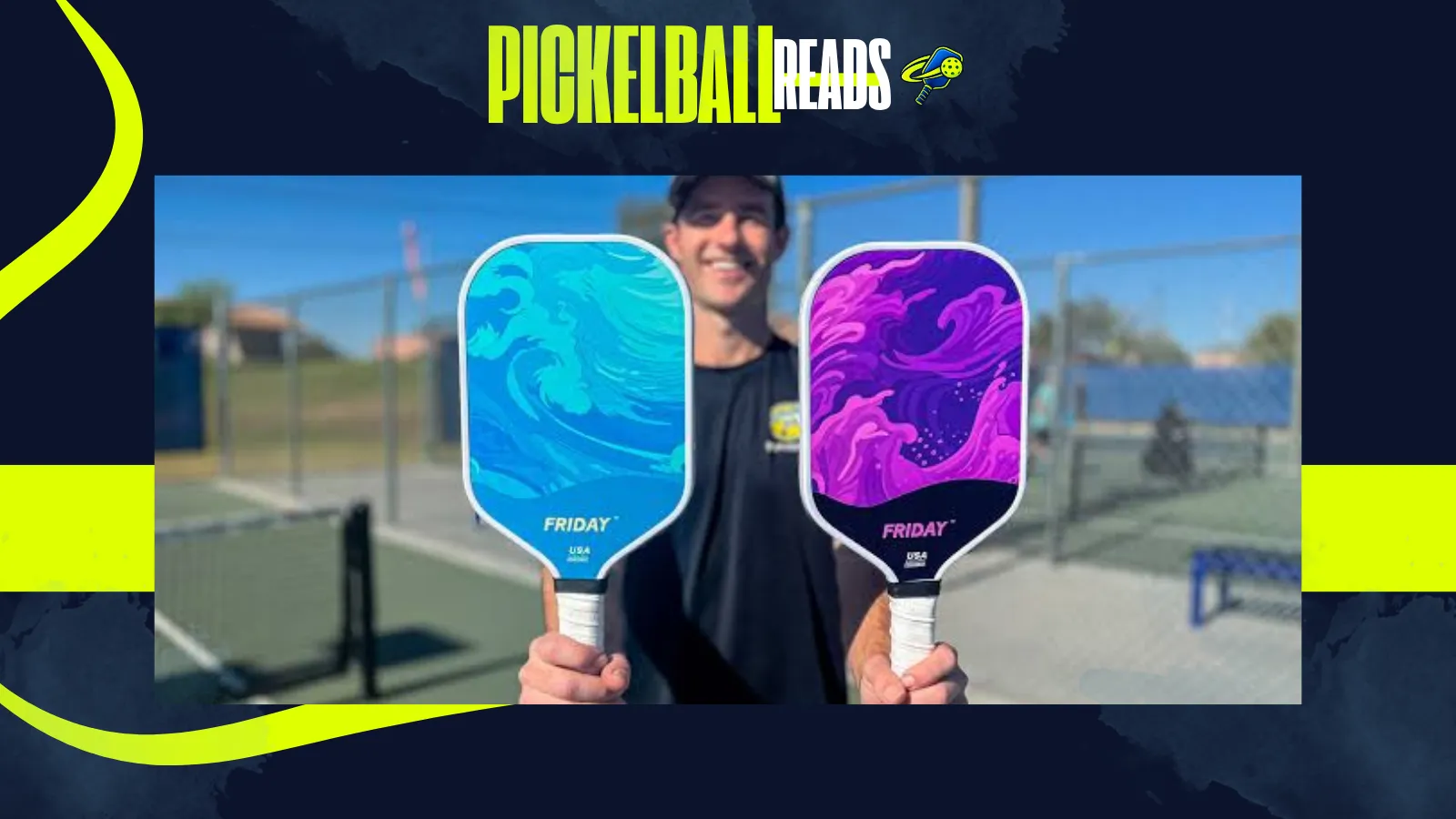
These specs are expert recommendations, not USA Pickleball rules. The official rules are in the next section.
Static weight, 7.8 to 8.1 oz: a comfort and stability range, not a rule. Too light can feel unstable. Too heavy can slow your hands at the net and tire your wrist.
Swing weight, 105 to 117: how heavy a paddle feels when you swing it, which is not the same as static weight. If it is listed, use it as a second check. If it is not listed, judge by feel.
Twist weight, 6.5 or higher: how much a paddle resists twisting on off centre hits. Higher is better for beginners, because they hit off centre often.
Core thickness, 16mm: a thicker core gives more control, a softer feel, and a bigger margin on soft shots. A 14mm core adds pop most beginners do not need yet.
Shape, standard or hybrid: the largest sweet spots and the most forgiveness. Elongated paddles add reach but punish off centre contact.
Grip size and handle length: hold the paddle in your normal grip and check whether the index finger of your other hand fits in the gap between your fingertips and your palm. If it fits snugly, the grip is about right. If there is no room, size down. If you are between sizes, choose the smaller size, because you can build it up with overgrip tape.
The Official Paddle Rules, Separated From Advice
Under the 2026 USA Pickleball Official Rulebook, Section 3.D:
Brand and model must be clearly marked, with the USA Pickleball Approved seal or text treatment. Paddles made before that requirement must still be on the approved list for sanctioned play.
Combined length and width, including edge guard and butt cap, must not exceed 24 inches. Length alone must not exceed 17 inches. There is no restriction on paddle thickness.
There is no restriction on paddle weight.
The paddle must be made of safe, rigid, non compressible material meeting the USA Pickleball Equipment Standards Manual.
The hitting surface must not contain holes, cracks, delamination, or indentations that break the surface, rough texturing, sandpaper characteristics, rubber, moving parts that increase head momentum, anti skid or sand textured paint, or any material that causes additional spin, or a reflective finish that could affect opponents.
For full wording, see the Official USA Pickleball Rulebook. For a short summary, see the Essential Pickleball Rules Summary.
In short: weight, thickness, swing weight, twist weight, and grip size are buying choices, not rulebook limits. Size, material, surface, and approved list status are the rulebook points. For sanctioned play, check the exact brand and model on the USA Pickleball Approved Paddle List before you buy, because approval status can change.
Shape: Standard, Hybrid, or Elongated
Standard, also called widebody, is the most forgiving shape, with the largest sweet spot and easiest handling. Selkirk describes its Epic shape as its traditional shape, best for beginner to intermediate players or players without previous racquet sports experience. That lines up with the general advice: start wide.
Hybrid sits between standard and elongated. It gives a little more reach, while keeping more forgiveness than a full elongated shape.
Elongated is the shape to avoid as a first paddle, unless you already have strong racquet sports experience. Selkirk describes its Invikta shape as its elongated shape, best for intermediate to advanced players. Pickleball Kitchen makes the same point: avoid long, skinny paddles as a beginner, because they require much greater accuracy.
Core and Face: What the Materials Mean
Most beginner paddles use a polymer core. Pickleball Kitchen advises beginners to stick with polymer cores and avoid nomex and aluminium cores for a first paddle. Polymer gives a softer, more controlled feel. Nomex is harder and less forgiving. Wooden paddles are the cheapest option, and Pickleball Kitchen advises avoiding them if you can, because they are heavy and less consistent.
Common faces include composite, fiberglass, graphite, and carbon fiber. Composite gives a balanced, forgiving feel. Fiberglass feels softer and can generate more spin, which can suit former tennis players. Graphite or carbon fiber gives a crisper, more controlled feel, and is common on modern control paddles. Do not buy a face because it sounds advanced. Buy the paddle that feels more predictable on soft shots, dinks, and resets.
What to Avoid
Buying for power or pop. Control wins beginner games. A power paddle sends more balls long and wide until your swing is consistent.
Chasing spin as a shortcut. Learn placement and soft shots first, then let spin follow.
Copying the pros or your friends. A pro paddle is built for a pro swing, not yours.
Going too cheap or too expensive. Too cheap means a dead feel and an early replacement. Too expensive means paying for performance you cannot use yet.
Switching paddles every few weeks. Give a sensible paddle a season, so you learn how it responds.
Surface and Spin: Do Not Overthink It
A modern control paddle gives enough spin for dinks, drops, and topspin drives, without chasing a spin number. For a beginner, the order is: control first, placement second, spin third. Do not buy a paddle because of a spin RPM number alone, unless you know how it was measured.
How to Choose in Five Steps
Start with weight. Aim for a comfortable weight in the recommended range, and test it with a few swings and practice hits.
Choose shape. Start with standard or hybrid.
Choose core thickness. Start with 16mm for control. Consider 14mm later, for more pop.
Check grip. Use the index finger test above, and check handle length if you use a two handed backhand.
Check approval and price. Check the exact model on the USA Pickleball Approved Paddle List for sanctioned play, and check the current retailer price.
For how the game works once you have a paddle, see how to play pickleball. For habits that help a new player improve, see pickleball tips for beginners.
Price Versus Performance, and When to Upgrade
At the low end, performance rises quickly with price, because you move from a dead paddle to a real control paddle. In the middle range, it rises more slowly, and at the high end it rises very slowly for a beginner. That is the case for skipping a cheap paddle entirely, if you will play regularly: one paddle in the 80 to 100 dollar range, used for a season, usually costs less than a cheap paddle plus a replacement.
Upgrade only when your contact is consistent, your soft game is reliable, and you can name a specific limit of your current paddle, such as more reach for singles or a thinner core for more pop. For players in Canada, the same 2026 rulebook applies for sanctioned play, but prices will be in Canadian dollars, so check a Canadian retailer on the day you buy.
Frequently Asked Questions
What is the best pickleball paddle for beginners?
There is no single best paddle for every beginner, because weight, shape, and grip differ. Start with a control paddle with a large sweet spot, a standard or hybrid shape, a 16mm core, and a comfortable weight. Check the exact model on the USA Pickleball Approved Paddle List for sanctioned play.
How much should a beginner spend on a pickleball paddle?
Plan for 80 to 100 dollars in United States prices for a first paddle that will last a first season. Paddles under 50 dollars are often a false economy for regular players, and paddles from 150 to 200 dollars are a grow into tier, not a requirement. Check current prices, and Canadian prices separately, on the day you buy.
Is a 14mm or 16mm paddle better for beginners?
A 16mm paddle is better for most beginners, because a thicker core gives more control, a softer feel, and a bigger margin on soft shots. A 14mm core adds pop most beginners do not need yet. There is no official rule on thickness, so this is a recommendation, not a legality point.
What paddle shape is best for beginners?
Standard or hybrid shapes are best, because they offer the largest sweet spots and the most forgiveness. Elongated paddles add reach and power, but punish off centre contact, which beginners still make often.
How do I measure grip size?
Hold the paddle in your normal grip and check whether the index finger of your other hand fits in the gap between your fingertips and your palm. If it fits snugly, the grip is about right. If there is no room, size down. If you are between sizes, choose the smaller size, because you can build it up with overgrip tape.
Conclusion
Best pickleball paddles for beginners are built around a simple idea: control first, forgiveness second, and power later. Start with a standard or hybrid shape, a 16mm core, a comfortable weight, and a grip that fits. Check the approved list and current retailer price before you buy, and use the spec ranges in this guide as recommendations, not rules. Practise with that paddle for a season, and upgrade only when you can name a specific limit of the paddle you have.